
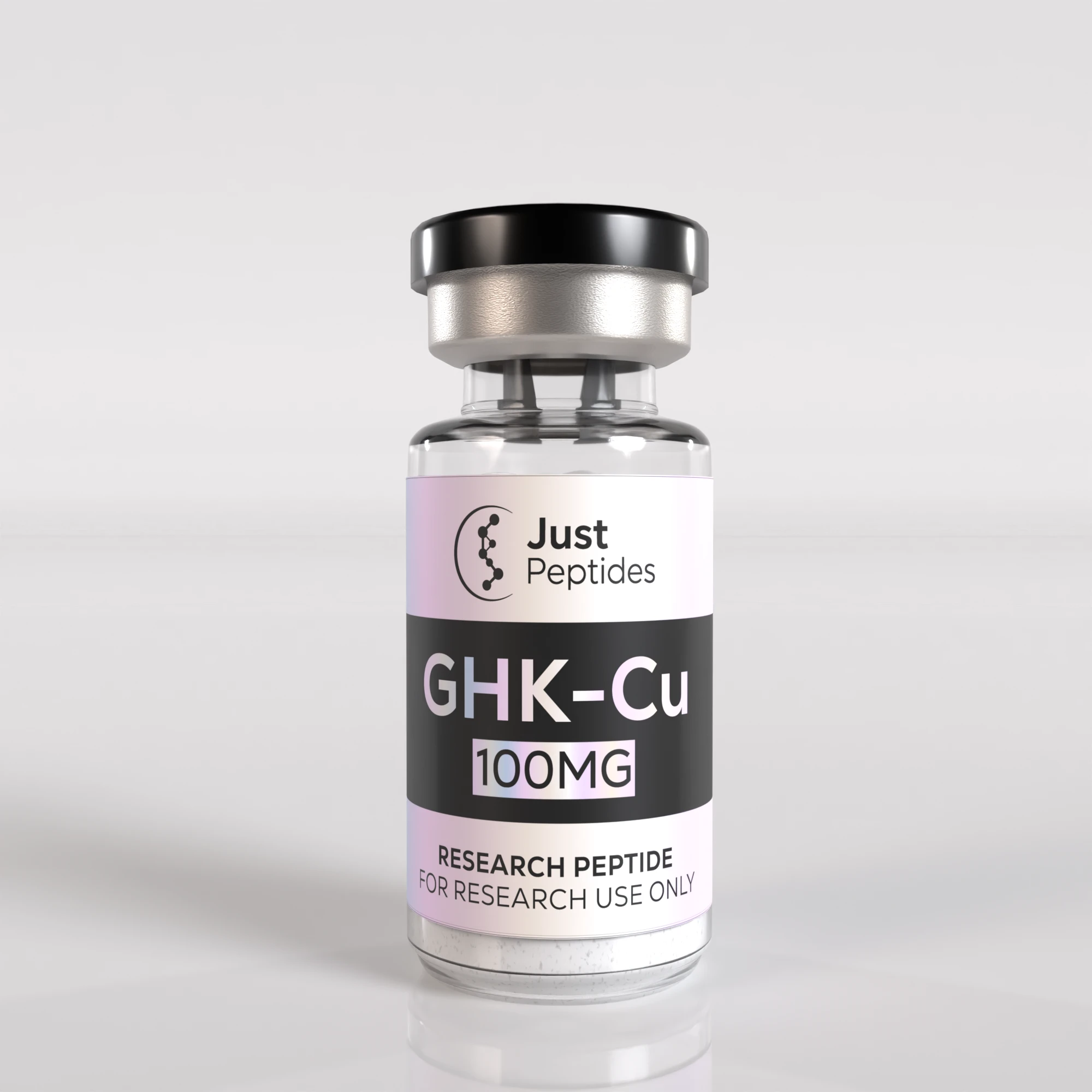
GHK-Cu 100MG – Research-Use-Only Peptide
GHK-Copper (Glycyl-L-Histidyl-L-Lysine-Copper) is a synthetic peptide complex widely studied for its potential biological properties in research settings. This peptide is characterized by its copper-binding moiety, which influences its stability and cellular uptake mechanisms. Below are the key details regarding its research applications.
Research Context
GHK-Cu has been extensively explored in preclinical and basic science research due to its ability to enhance cellular signaling pathways. The peptide is known for its involvement in wound healing, tissue repair, and modulation of oxidative stress responses. In research environments, it is frequently utilized to study mechanisms underlying these processes, often in conjunction with other experimental models.
Research Overview
GHK-Cu is a synthetic analog of a naturally occurring tripeptide sequence, originally isolated from bovine pancreatic extract. When conjugated with copper, the peptide exhibits enhanced bioavailability and stability, allowing for more controlled experimental applications. Research has focused on its role in cellular uptake, tissue regeneration, and inflammatory responses, making it a valuable tool in basic biological and biomedical sciences.
Key Research Focus Areas
- Wound Healing and Tissue Repair: GHK-Cu has demonstrated efficacy in accelerating wound closure and enhancing extracellular matrix remodeling in preclinical models, often evaluated in studies involving skin injuries or burn models.
- Cellular Uptake and Signaling: The peptide is studied for its ability to cross cell membranes efficiently, influencing intracellular signaling pathways involved in cell proliferation, migration, and survival.
- Oxidative Stress and Antioxidant Activity: Research explores GHK-Cu’s potential to mitigate oxidative damage, particularly in experimental models of aging, neurodegenerative diseases, or ischemic injury.
- Inflammatory Responses: Mechanistic studies examine its role in modulating inflammatory cascades, including cytokine production and tissue inflammation, often assessed in immune-compromised or chronically inflamed tissues.
- Neuroprotection: Emerging research investigates GHK-Cu’s potential neuroprotective properties, particularly in models of cerebral ischemia, traumatic brain injury, or neurodegenerative conditions.
Important Safety and Compliance Notice
This GHK-Cu peptide is intended solely for research purposes and is not intended for human or animal consumption. Any use outside of a regulated academic or institutional research context is strictly prohibited. Always ensure compliance with applicable laws and ethical guidelines governing peptide research. For research use only. Not for human or animal consumption.
| Size | 100MG |
|---|
Reviews
There are no reviews yet.