
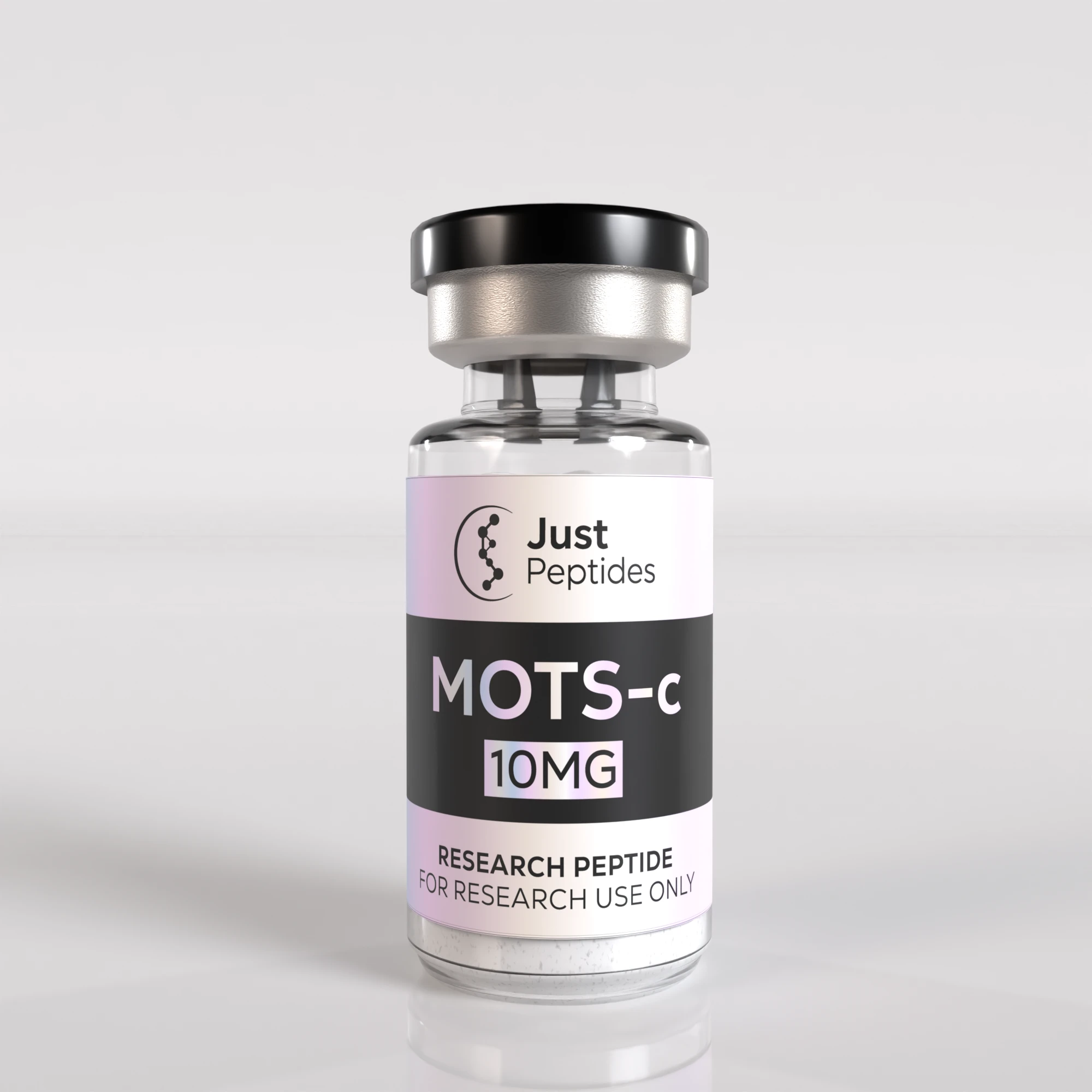
MOTS-c 10MG
MOTS-c (Mitochondrial Open Reading Frame small C) is a newly identified peptide derived from mitochondrial RNA. Its scientific exploration has primarily focused on its potential role in cellular and metabolic processes within a research context.
Research Context
MOTS-c was first discovered in 2012 through large-scale RNA sequencing efforts aimed at identifying non-coding RNA products. Unlike conventional peptides, MOTS-c has been identified in both human and animal mitochondrial transcripts and has been hypothesized to have potential biological functions beyond mere translation noise. Subsequent studies have examined its expression across various tissues and its possible involvement in metabolic regulation, oxidative stress responses, and mitochondrial function.
Research Overview
Current research on MOTS-c centers on its putative role as a potential mitokine, a term coined to describe peptides that influence mitochondrial health and function. Investigators have explored its expression levels under various physiological and pathological conditions, such as aging, exercise, and metabolic disorders. Some studies suggest that MOTS-c may contribute to mitochondrial biogenesis, energy metabolism, and cellular homeostasis. However, its precise mechanisms of action remain under investigation.
Key Research Focus Areas
- Mitochondrial Function and Biogenesis
- Metabolic Regulation and Energy Homeostasis
- Expression Analysis Across Tissues and Conditions
- Role in Cellular Stress Responses
- Comparison with Other Mitokines (e.g., IRBM-1, TIGAR)
Research Considerations
Given its emerging research interest, MOTS-c is not yet widely commercialized for therapeutic purposes. All investigations involving MOTS-c must adhere to strict scientific protocols, including proper experimental controls, ethical considerations, and regulatory compliance. Research involving peptides such as MOTS-c should be conducted exclusively in accordance with institutional review boards, national regulations, and the principles outlined in the Declaration of Helsinki or other applicable guidelines.
For research use only. Not for human or animal consumption.
| Size | 10MG |
|---|
Reviews
There are no reviews yet.